NEED TO KNOW
- The Jeddah Tower in Jeddah, Saudi Arabia, is set to be the world’s tallest building upon completion.
- The current record is held by the Burj Khalifa at 2,722 feet including the spire..
- Jeddah Tower will be over 3,280 feet tall and cost a reported $1.2 billion to build.
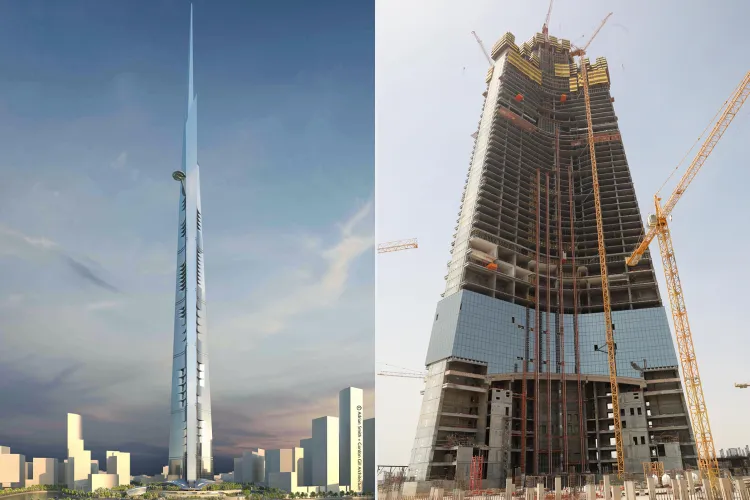
Construction is progressing on what’s set to become the world’s tallest building.
With a final planned height of over 3,280 feet, the Jeddah Tower located in Jeddah, Saudi Arabia, is set to break the current record held by the Burj Khalifa. Located along the Red Sea, the building will house residential, commercial and office spaces, including a luxury hotel and the world’s highest observation deck. The tower will be located at the center of a $20 billion redevelopment of the Jeddah Economic City, formerly known as the Kingdom City.
Behind the project are architects Adrian Smith and Gordon Gill of AS+GG Architecture in Chicago. Robert Forest, a partner at the firm, told Newsweek the team is eyeing an August 2028 completion of the tower. The firm told the outlet an “exact number of floors and height will be unveiled upon completion,” but it “will have more than 130 floors.”
Forest said: “Construction activities have ramped up, and the atmosphere on site is robust. The entire team is committed and focused on realizing this iconic structure for the Kingdom of Saudi Arabia.”
According to Architectural Digest construction on the tower began in 2013 but paused in 2018 after leaders were arrested in the 2017 to 2019 Saudi Arabian purge. The COVID-19 pandemic caused even further delays, but Dezeen reports works picked back up in September 2023.
The new building will be about 564 feet taller than the Burj Khalifa in Dubai, per AD. That building currently holds the title of world’s tallest structure.
The spire-like design employs a neo-futuristic style. Architects Smith and Gill explained the shape to AD as being inspired by palm fronds, which are found throughout Saudi Arabia. The designers also wanted to pay homage to the technology that makes an advancement like this possible.
“The geometry of the tower, starting at the base as a single tripod form then gradually separating at the spire, is tied to the wind performance characteristics of the tower — an analogy of new growth fused with technology,” they said.
Story by People.